MyBlog
Explore Blog
storage
May 04, 2026 at 10:53 PM
The Ultimate Guide to Browser Storage: Where Your Data Lives
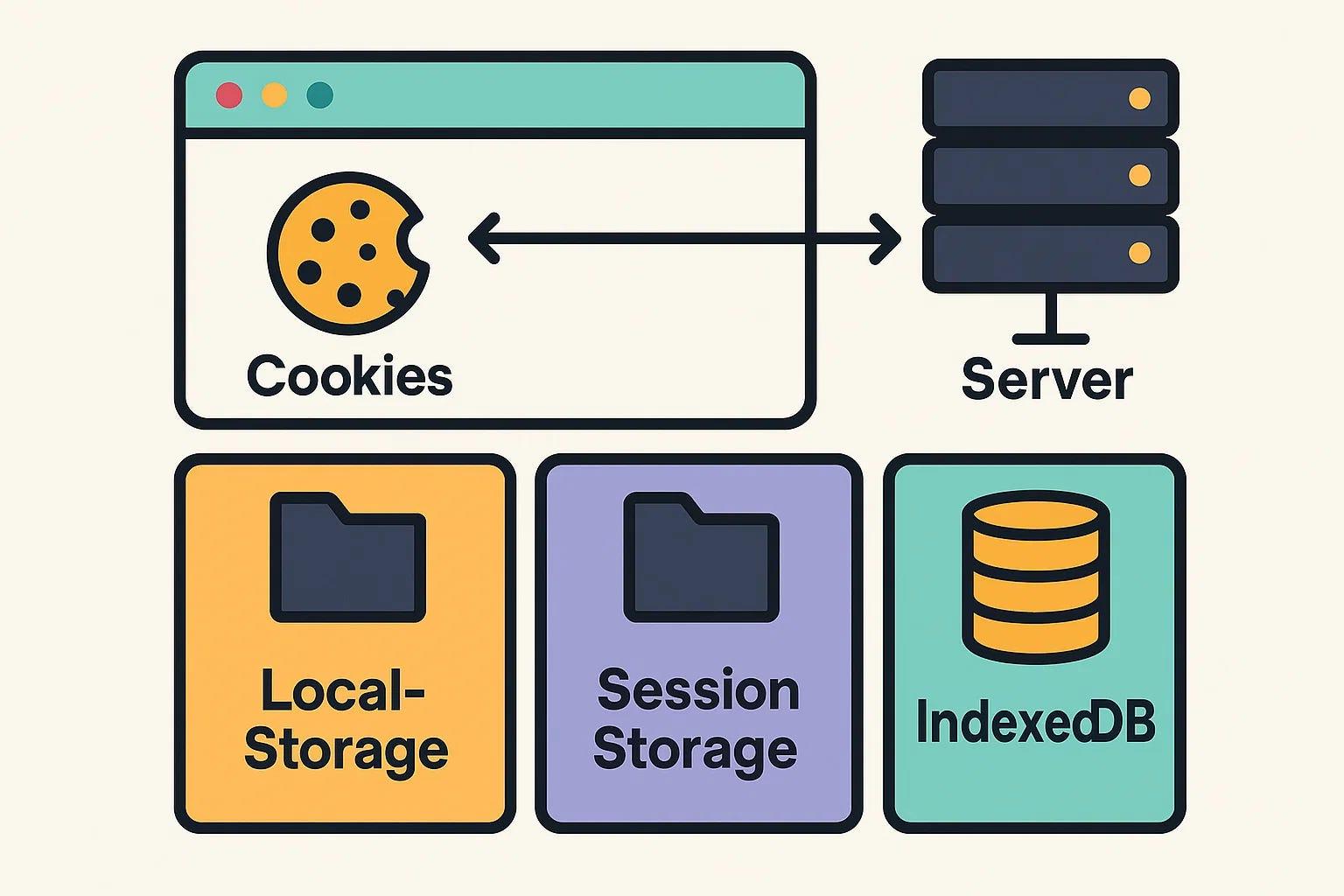
Modern web applications are not just static pages anymore—they are dynamic, fast, and highly personalized. To achieve this, browsers need ways to store data locally on the user’s device. This is where web storage technologies come in. From remembering login sessions to caching entire web apps for offline use, browser storage powers almost everything we use daily on the web. In this blog, we’ll explore the major types of browser storage, how they work, and where they are used. Browser storage can be broadly divided into: Small temporary storage (Cookies, Session Storage) Persistent key-value storage (Local Storage) Large structured storage (IndexedDB) Cache systems (Service Worker Cache) Advanced/shared storage systems (Extensions, Shared Storage)